Acoustic Glass Partitions & Soundproof Office Screens
Clarity meets silence
Why choose acoustic glass?
Sound Insulation
Achieve Rw values of 40-54dB, meeting and exceeding UK Building Regulations Part E (Scotland Section 5, BSTH) for acoustic performance in commercial and residential applications.
Natural Light
Maximise daylight penetration throughout your space, reducing artificial lighting costs and improving occupant wellbeing—a key factor in BREEAM and WELL certifications.Visual Connectivity
Maintain sightlines and spatial awareness while creating defined zones, fostering collaboration without acoustic compromise.Fire Resistance
Available with fire ratings up to 120 minutes (EI 120), complying with UK fire safety regulations and Building Regulations Approved Document B.
Flexibility
Demountable systems allow for future reconfiguration, protecting your investment and adapting to evolving workplace strategies.Aesthetics
Slimline profiles and minimal visual obstruction create contemporary, sophisticated interiors that align with modern British architectural trends.Technical specifications
Glass Types & Configurations
Laminated acoustic glass
6.8mm – 12.8mm
System Configurations
Single and Double Glazed
Acoustic Performance range
35dB – 54dB
Low-E coatings
Available
Manifestation compliance
Part M compliant
Frame Systems
Aluminium framing
Powder-coated RAL colours
Frameless options
Butt-jointed glass
Timber veneered frames
FSC certified options
Steel profiles
Crittall-style aesthetics
Acoustic Performance Ratings
Single Glazed Partitions
Rw 35-40 dB
Double Glazed Partitions
Rw 40-54 dB
Testing standard
BS EN ISO 10140
Applications across sectors
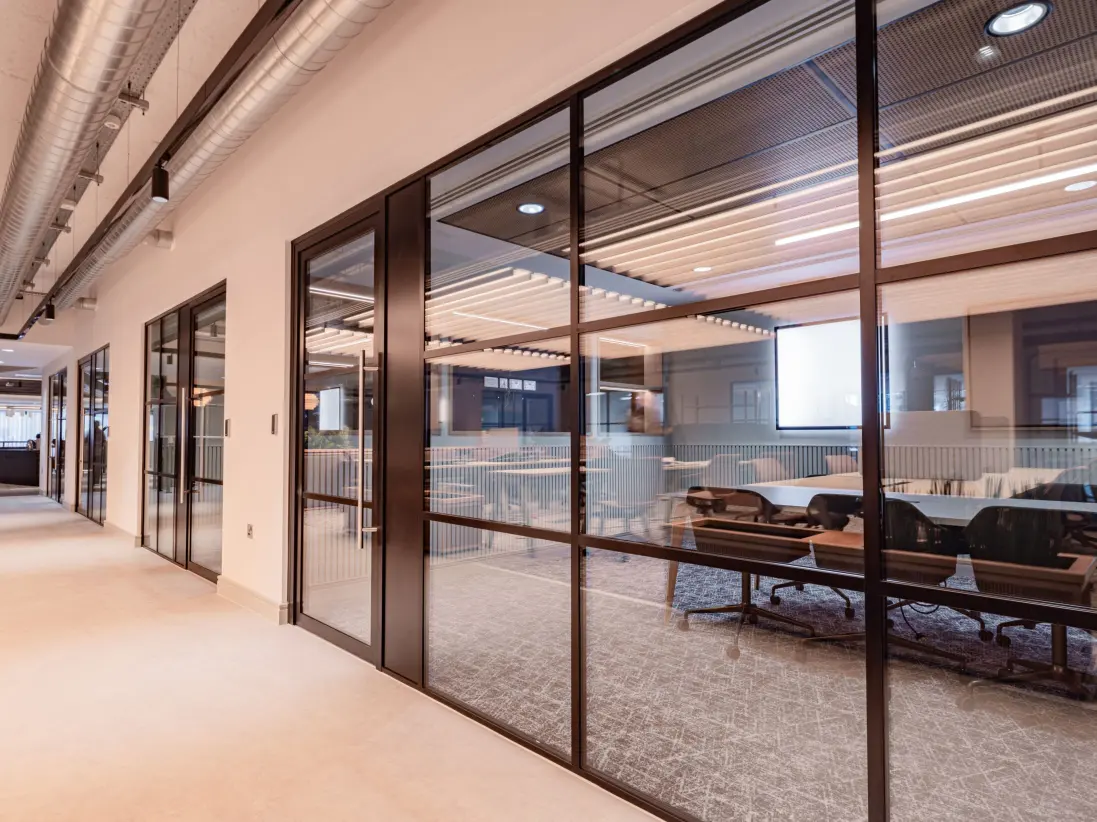
Corporate Offices
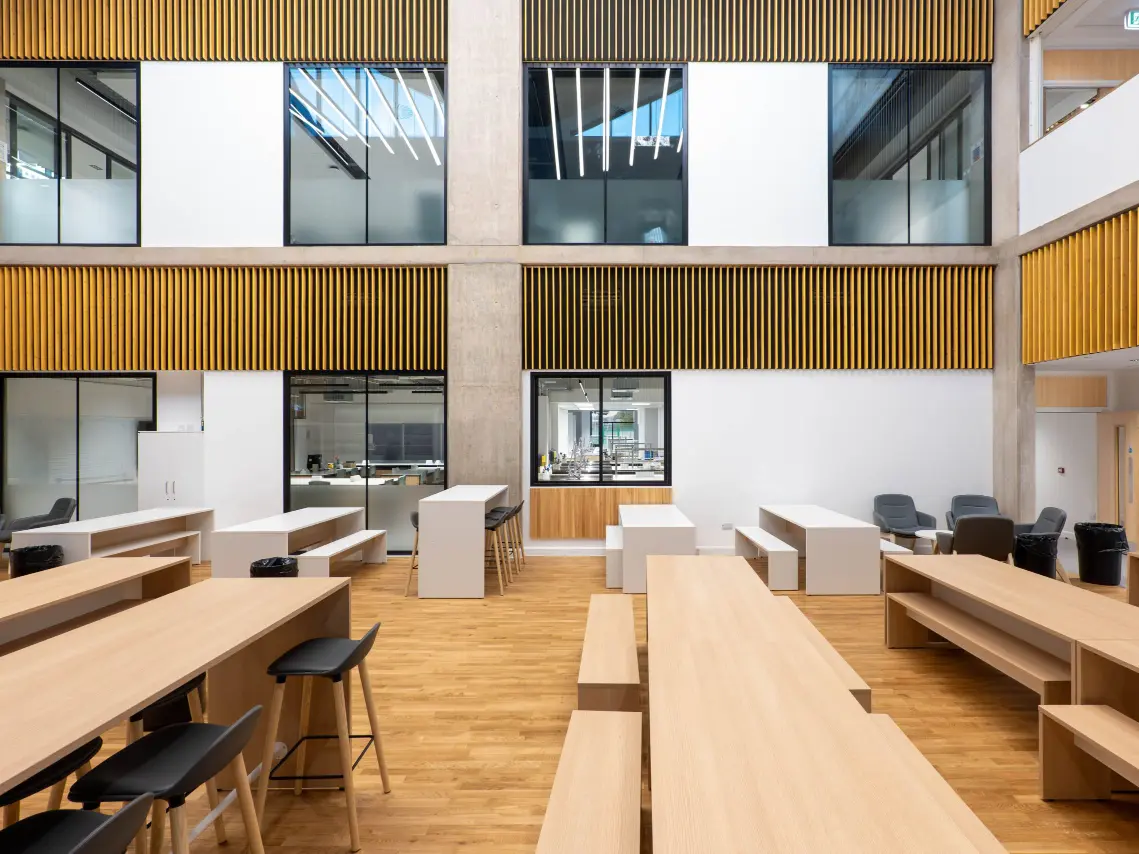
Education
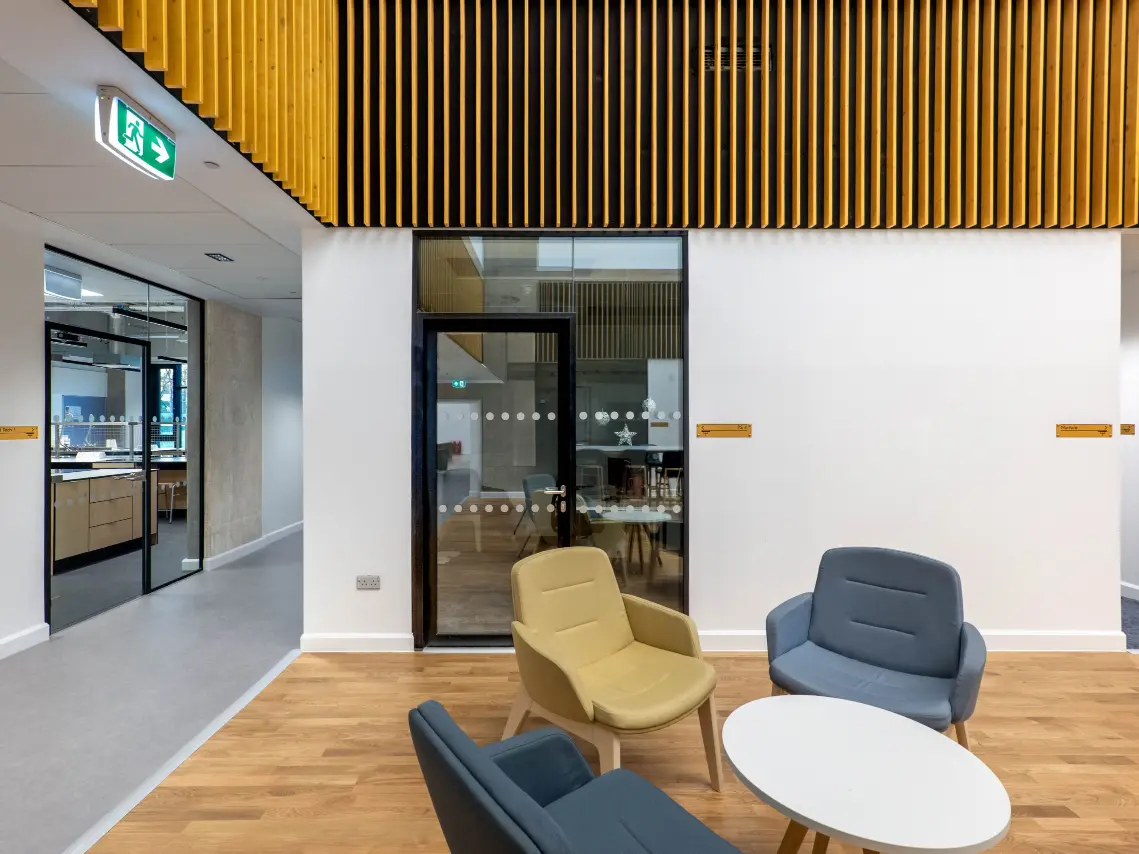
Healthcare
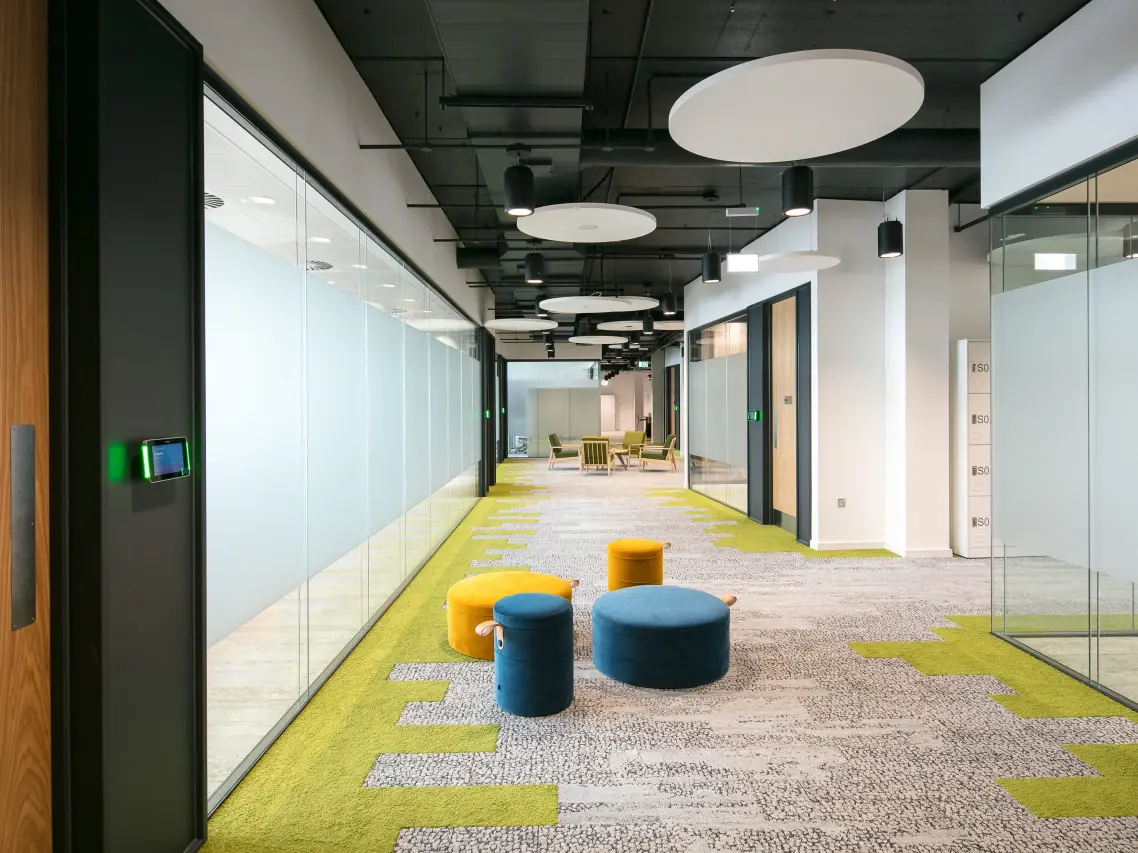
Hospitality & Leisure
UK regulations & standards
Building Regulations
- Part E (Resistance to sound): Minimum Rw 40dB for walls between rooms in office buildings; Rw 43dB for residential conversions
- Part B (Fire safety): Fire-rated glass systems available from 30 to 120 minutes integrity and insulation
- Part M (Access): Vision panels and manifestation requirements for accessibility and safety
- Part L (Conservation of fuel and power): U-values and thermal performance considerations for glazed systems
Sector-Specific Guidance
- BB93 (Building Bulletin 93): Acoustic design standards for schools and free schools in England
- HTM (Health Technical Memoranda): Guidance for healthcare facilities including acoustic privacy requirements
- BREEAM: Points available for acoustic comfort and daylighting strategies using glazed partitions
- WELL Building Standard: Acoustic and light criteria supporting occupant wellness
British & European Standards
- BS EN ISO 10140: Laboratory measurement of sound insulation
- BS EN ISO 717: Rating of sound insulation (Rw values)
- BS 5234: Partitioning (including materials, design, and construction)
- BS EN 12600: Impact resistance classification for safety glazing
Safety & Manifestation
- Manifestation at 850-1000mm and 1400-1600mm heights to comply with Part M
- Minimum 150mm wide manifestation in contrasting colour/tone
- Safety glass requirements per BS 6262 and BS EN 12600
Installation & considerations
Pre-Installation
- Structural survey to confirm floor loading capacity and fixing substrate suitability
- Acoustic performance requirements defined and documented
- Coordination with services (HVAC, electrical, data) for integration
- Fire compartmentation strategy confirmed with building control
- Access and logistics planning, particularly for upper floors
Installation Process
- Floor and ceiling track installation with acoustic sealing compounds
- Frame assembly and plumb alignment to tight tolerances (±2mm)
- Glazing installation with acoustic interlayer and compression seals
- Perimeter sealing with acoustic mastic (no air gaps permissible)
- Door integration with acoustic drop seals and threshold seals
Critical Details
- Junctions with existing walls require careful detailing to prevent flanking transmission
- Services penetrations must be sealed with acoustic fire stopping products
- Electrical sockets back-to-back arrangements should be avoided
- Raised access floor voids may require sealing to prevent sound leakage
- Post-installation acoustic testing recommended for critical applications
“The acoustic performance of glazed partition systems is only as good as the weakest point in the installation. Meticulous attention to perimeter sealing, door thresholds, and service penetrations is essential to achieving specified performance levels.”
— Institute of Acoustics (UK)
Cost considerations
Lead Times & Factors
Cost Influencing Factors
- Glass specification (thickness, lamination, coatings)
- Frame material and finish quality
- Acoustic performance requirements
- Fire rating certification
- Project location and site access
- Door integration complexity
- Demountable vs. permanent installation
- Bespoke manufacturing requirements
Sustainability & circular economy
Environmental Benefits
- Maximised daylight reduces artificial lighting energy consumption by 30-50%
- Demountable systems enable reuse and reconfiguration without waste
- Glass and aluminium are infinitely recyclable materials
- EPDs (Environmental Product Declarations) available from major manufacturers
BREEAM Contributions
- Hea 01: Visual comfort through daylight provision
- Hea 05: Acoustic performance and sound insulation
- Wst 01: Construction waste management (demountable systems)
- Mat 03: Responsible sourcing of materials
Circular Economy
- Design for disassembly principles enable future adaptation
- Component replacement extends system lifespan beyond 25 years
- Refurbishment markets for demountable partitions reduce embodied carbon
- Material passports increasingly available for commercial projects